Cricket’s most exciting tournament has disappeared—and may never return.
If you were a cricket fan between 2009 and 2014, you’ll likely recall the Champions League T20. IPL champions playing against Big Bash winners. Caribbean Premier League sides facing South African franchises. The best domestic T20 teams from around the world competing in one tournament for a title that genuinely meant something. And then it stopped.
No dramatic announcement. No farewell season. Then 2015 arrived, and that was it. A quiet confirmation that the Champions League T20 would not be coming back. No farewell season. No proper explanation. Just a statement and then silence.
For fans who had followed it since that first surprising edition in 2009, it felt abrupt. A tournament that had produced genuinely good cricket across six editions simply disappearing from the calendar without anyone really explaining why—or what was supposed to replace it.
This guide covers the real story. What actually happened to Champions League T20, what the competition achieved during the years it ran, and whether anything like it will ever exist again.
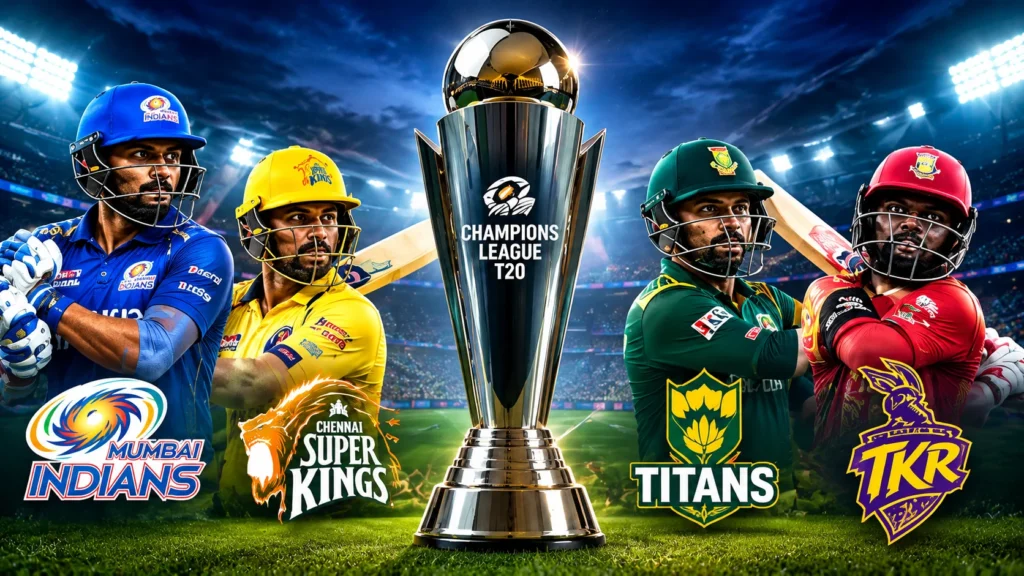
What the Champions League T20 Actually Was
Before understanding what happened to Champions League T20 it helps to understand what made it genuinely different from other cricket competitions.
CLT20 was not a national team tournament dressed up as a franchise competition. It was the real thing—domestic franchise teams from multiple cricket nations competing against each other with no national team involvement whatsoever. The IPL champion is playing against the Big Bash champion. The Caribbean Premier League finalist is facing South African franchise sides. Clubs versus clubs, a format of cricket that fans all over the world understood and loved to watch.
The event was jointly organized by the BCCI, Cricket South Africa, and Cricket Australia, three of the most powerful cricket boards in the world. The combination gave CLT20 real institutional backing and genuine participation from the world’s strongest domestic competitions.
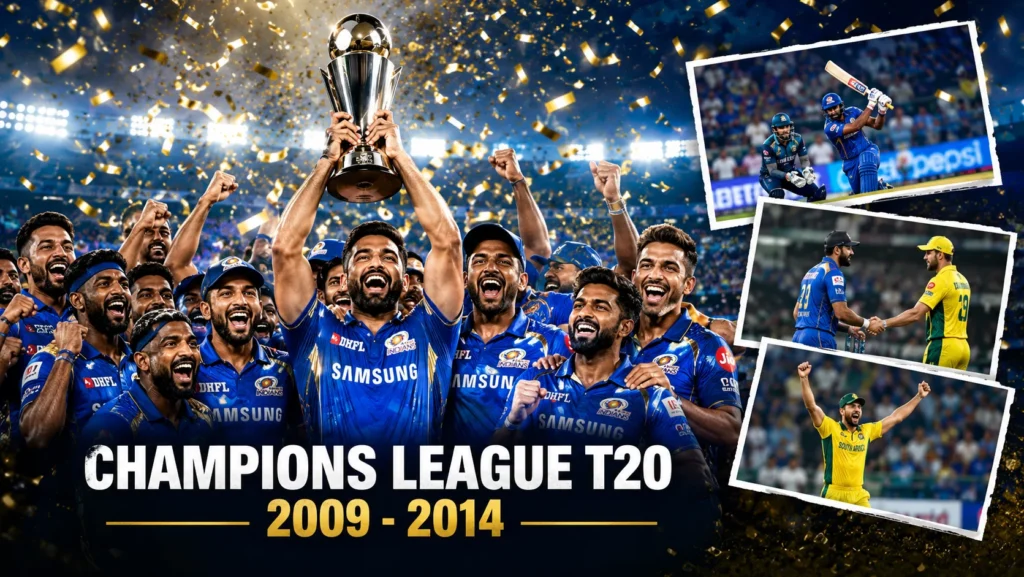
For Indian fans specifically, CLT20 answered a question the regular cricket calendar never addressed—could IPL sides compete at the highest franchise level internationally? The answer, as it turned out, was largely yes. The Mumbai Indians and Chennai Super Kings each won the tournament twice across its six editions. But the competition from Australian and Caribbean sides was genuine enough to make every edition worth watching.
Table of Contents
What Happened to Champions League T20—The Real Story
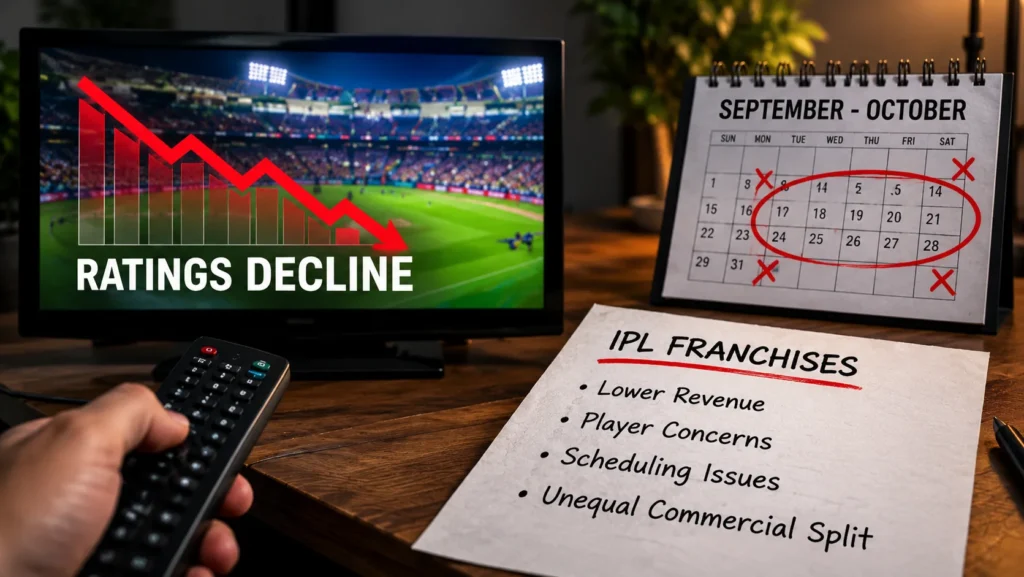
The official statement in 2015 cited commercial difficulties and falling ratings. The reality was more nuanced and made up of a few overlapping factors that together made the tournament unsustainable for its organizing boards.
Television Ratings Declined Sharply
The first two editions of CLT20 have had good viewership in India, the main broadcast market for the tournament. Those ratings had fallen by 2013 and 2014. Indian audiences were initially curious to see how the IPL sides fared against international competition.
Once that question was answered over a few editions, there was less reason to keep watching.
The tournament struggled to generate the sustained viewing engagement that broadcasting partners needed to justify rights fees. Without strong broadcast revenue, the financial model that funded participation incentives for international franchises became increasingly difficult to sustain.
IPL Franchises Had Concerns
IPL franchises were among the tournament’s key participants, but their enthusiasm for the format changed over time. By 2013 and 2014 these franchises had become significant commercial entities in their own right, with brand considerations, sponsorship relationships, and player management considerations.
Sending their best players to a tournament generating significantly less revenue than the IPL itself—and risking injury during a window that disrupted the pre-season preparation for the following year’s IPL—made less commercial sense as the franchise businesses matured. The willingness to participate enthusiastically that characterized the early editions had eroded by the time the tournament ended.
Scheduling Created Genuine Problems
The international cricket calendar is always overstuffed, and CLT20 occupied a space that presented genuine scheduling problems. The September to October window clashes with international tour commitments, start dates for domestic seasons in Australia and England, and the lead-up period to ICC events.
Getting the best available squads from every participating league into a two-week tournament window without conflicting with national team obligations or domestic season commitments proved increasingly difficult as the competition matured and the calendar remained as crowded as ever.
The Commercial Split Was Unequal
What happened to Champions League T20 was also partly a story about money and how it was distributed. The tournament generated the majority of its commercial value from Indian viewership, Indian broadcasting rights, and the presence of IPL franchises. But the revenue structure had to support participation from Australian, South African, and Caribbean sides, who were generating proportionally less commercial interest.
Sustaining a genuinely international competition on a commercial model that relied so heavily on one market—India—proved increasingly difficult as that market’s engagement declined. The other participating boards had less commercial incentive to absorb the scheduling disruption CLT20 created when the financial returns were already falling.
Governance Between Three Boards Was Complex
BCCI, Cricket South Africa, and Cricket Australia had their own priorities, their own broadcast partners, and their commercial relationships. Governance friction emerged from the alignment of three powerful and at times competing cricket administrations around a shared commercial structure, which absorbed considerable administrative energy.
As viewership declined and commercial returns fell, the patience for navigating that governance complexity diminished proportionally. The other boards had little incentive to fight for the tournament’s survival if the BCCI, the most commercially powerful of the three boards, showed less enthusiasm for continuing it.
What the Tournament Achieved Before It Ended
Understanding what happened to Champions League T20 requires recognizing what it actually delivered during the years it ran—because the discontinuation does not diminish those achievements.
Six editions produced consistently competitive cricket. The group stages regularly threw up upsets that no reasonable analyst could have predicted. Sydney Sixers winning the 2012 edition—defeating IPL sides with a roster assembled from Australia’s domestic competition—remains one of the most impressive franchise cricket achievements of the modern era.
The tournament proved that T20 franchise cricket could work at an international level. The concept was not flawed. The cricket was good. What failed was the commercial and governance structure built around a competition that the organizing boards ultimately decided cost more to maintain than it generated in return.
For Mumbai Indians and Chennai Super Kings specifically, CLT20 provided an international stage that validated their franchise quality beyond the Indian domestic context. Two titles each is a record that will stand permanently since the competition no longer exists to be challenged.
What Replaced CLT20
Nothing replaced what happened to the Champions League T20 in any direct sense. The gap it left in the global franchise cricket calendar has never been filled by an equivalent competition.
Several proposals for international franchise competition have circulated among cricket administrators since 2015. A restructured version of CLT20 involving more leagues and a different commercial model has been discussed. The ICC has considered a global franchise tournament concept that would involve teams from every major domestic T20 competition. None of these proposals has progressed beyond the discussion stage.
The individual domestic competitions that participated in CLT20 have continued and in some cases grown significantly. The Big Bash League expanded its format. The Caribbean Premier League established stronger international broadcast deals. The Pakistan Super League launched and developed genuine momentum. SA20 and ILT20 have emerged as new additions to the global T20 franchise landscape.
In 2026 the global T20 franchise ecosystem is richer and more competitive than at any point during the CLT20 era. The irony is that a champions tournament featuring the current editions of these competitions would arguably be more compelling than CLT20 ever was—but no organizing body has found a way to make it happen.
Could CLT20 Return
The honest answer to what happened to Champions League T20 and whether it will return is that the conditions have changed significantly since 2015—but the fundamental governance and commercial challenges remain.
The case for return is genuinely stronger in 2026 than it has ever been since discontinuation. More leagues mean more compelling participation. Streaming platforms have changed the commercial calculus for global cricket content in ways that make international franchise competition more viable than it was a decade ago. Franchise brands like Mumbai Indians and Chennai Super Kings have global fan bases that generate real international viewership interest in any competition featuring them.
The case against return is equally persistent. The international cricket calendar is more congested in 2026 than it was in 2014—not less. The governance challenges of aligning multiple cricket boards and franchise owners around a shared commercial structure have not become simpler. And the BCCI—whose commercial interests would drive any viable CLT20 revival—has shown no public indication of prioritizing the tournament’s return over other commercial initiatives.
Cricket fans who want CLT20 back—and there are many of them—are left watching the global T20 franchise landscape grow more compelling with every passing season while the tournament that would bring it all together remains absent from the calendar.
Following Franchise Cricket in 2026
The major domestic competitions within cricket give Indian fans who want to follow franchise cricket outside the IPL calendar real cricket to watch and bet on. The Big Bash League, the Caribbean Premier League, the Pakistan Super League, SA20, ILT20, and The Hundred all provide world-class T20 cricket with players you know from IPL squads playing in different franchise settings.
Wazirwin covers international T20 franchise cricket markets for Indian players—including competitions outside the IPL window with INR betting support through UPI and Paytm. For fans who want to engage with franchise cricket from around the world, the platform provides year-round coverage of the competitions that CLT20 once brought together under one roof.
Whether you’re following the Big Bash to see how IPL familiar players perform in Australian conditions or the CPL because you want to see Caribbean franchise cricket at its best, Wazirwin provides the market coverage and payment convenience that makes following these competitions almost straightforward for Indian players.
Final Thoughts
Champions League T20 happened because a genuinely good cricket competition couldn’t survive the clash of commercial and governance realities. Falling viewership, IPL franchise concerns, a congested calendar, uneven commercial benefits, and a complicated three-board governance structure together made it unviable for the organizing boards to continue.
The cricket was good. The concept was proven. The execution was flawed in ways that proved fatal to the competition’s long-term survival.
In 2026 CLT20 remains discontinued, and no confirmed revival is on the horizon. The global T20 franchise landscape it helped pioneer has continued growing without it. And cricket fans who remember what the tournament was at its best continue wondering whether it will ever come back—and hoping that whoever eventually organizes a successor gets the commercial and governance structure right enough to make it last.

Frequently Asked Questions
What happened to Champions League Twenty20?
BCCI, Cricket South Africa, and Cricket Australia canceled CLT20 in 2015. With TV ratings going down, concerns of the IPL franchises, issues of three-board governance, and scheduling conflicts, it was not sustainable. The numbers did not work, and the boards walked off.
Why did the Champions League T20 fail commercially?
Television ratings declined significantly from the early editions as Indian viewers—the primary audience—became less engaged once the novelty of IPL sides competing internationally had been established. Without strong broadcast revenue the financial model supporting international franchise participation became unsustainable.
Who won Champions League T20?
Mumbai Indians grabbed it twice, in 2011 and 2013. Chennai Super Kings also won twice, in 2010 and 2014. New South Wales Blues took the very first title back in 2009, and the Sydney Sixers had their moment in 2012.
Will Champions League T20 ever come back?
Nothing’s confirmed as of 2026. Honestly, the case for a comeback looks stronger than it has in years—more leagues around now, bigger franchise brands, a totally different broadcast landscape—but the same old governance and scheduling headaches are still sitting there unresolved.
Where can Indian fans follow international T20 franchise cricket?
Wazir win got you covered for the big international leagues—Big Bash, CPL, PSL, and more — with INR betting support through UPI and Paytm, so Indian players don’t have to worry about the payment side of things.